
Friday Dispatch–Issue No. 6 | The Full Cleveland Returns (and Other Gentle Warnings)
Golf may be the only sport where a guy now needs a trainer, a chef, a sports psychologist and a mobility routine to chase records set by men who smoked unfiltered cigarettes and slept in parking lots.
A white belt the size of a dinner plate. A 23-year-old with swagger that made the khaki crowd clutch their pearls. Anthony Kim sent us hurtling back to 2008 — and reminded us that in golf, as in club life, the pendulum always swings. What’s old becomes new again. The question is whether we have the steadiness to greet the cycle without losing what actually works.
Golf may be the only sport where a guy now needs a trainer, a chef, a sports psychologist, and a mobility routine to chase records set by men who smoked unfiltered cigarettes and slept in parking lots. The meme landed with the quiet thud of truth. We surround ourselves with layers of support, yet the game still asks for the same raw ingredients it always has: determination, grit, and the willingness to show up when no one is watching.
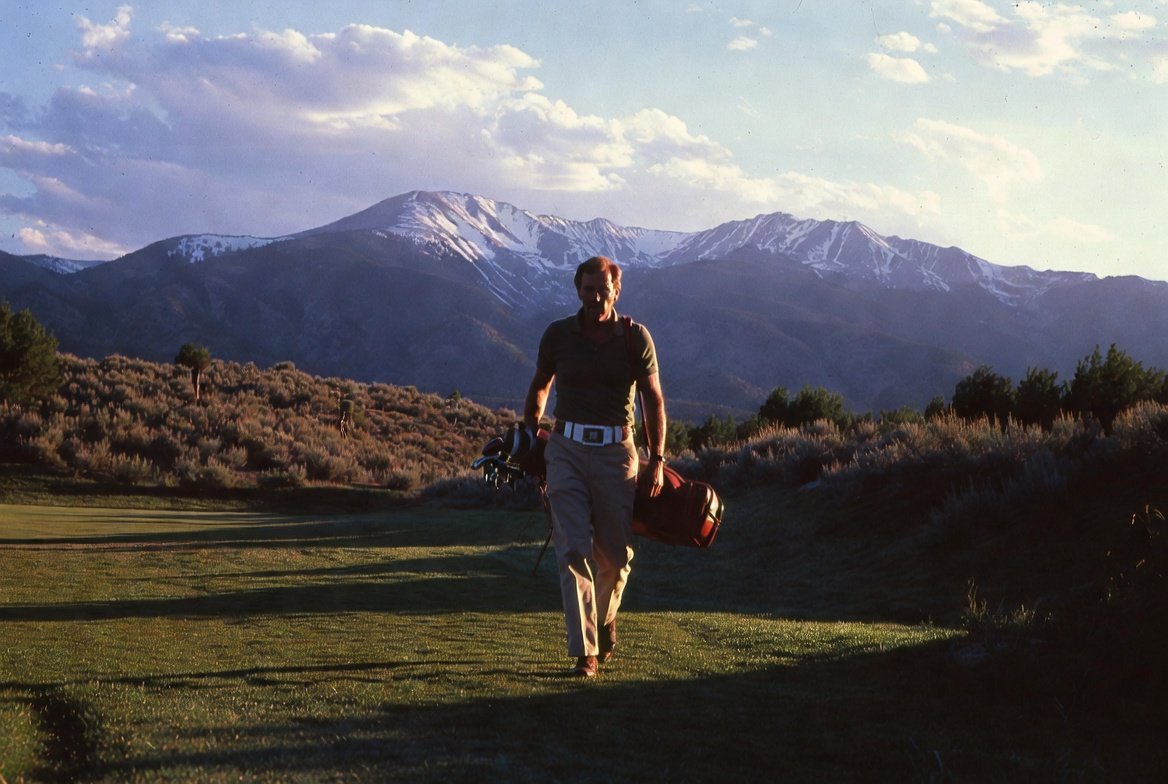
Lately the white belt has begun its inevitable return. Not on Tour yet — there it remains politely hidden beneath white pants — but in club parking lots and on first tees it is making a cautious comeback. The Full Cleveland. Some wear it with ironic detachment. Others wear it with the unapologetic confidence of a man who has decided the 1970s were onto something. Either way, the accessory arrives like a familiar guest who forgot to call ahead.
I smile every time I see one. Not because the look is timeless (it isn’t), but because the cycle itself is. Johnny Miller helped make the white belt famous in the seventies, pairing it with plaid pants loud enough to wake the gallery. It disappeared under the wide-leg khaki wave of the eighties and nineties. Jesper Parnevik and then Anthony Kim brought it roaring back with buckles the size of truck grilles. Pearl-clutching followed. Fashion gatekeepers declared it dead again. And now, quietly, it circles back around — slower in the club world than on Tour, as trends always are.
The humor is gentle and familiar. A member strides to the tee with the white belt gleaming like a declaration. His playing partners exchange the briefest of glances — the golf equivalent of “we’re not discussing the belt.” Someone offers a compliment that is technically accurate but carefully neutral. The group plays on. Eighteen holes later the belt has done exactly what every other golf fashion statement eventually does: it becomes background noise while the real game unfolds in the space between shots.
Because most of golf doesn’t happen at address. It happens in the walk to the next tee, the quiet repair of a ball mark no one else noticed, the decision to keep grinding when the swing feels foreign and the scorecard is ugly. All the trainers, chefs, and psychologists in the world cannot manufacture the simple decision to care for the course in ways that go unseen. That care — the unseen maintenance of standards — is what actually builds institutions that last.
Clubs face the same cyclical temptation golfers do. A new technology platform promises transformation. A flashy rebrand promises relevance. A well-meaning board member pushes for rapid change because “the younger members expect it.” Each wave arrives with confidence and a dinner-plate-sized buckle of certainty. Some of these ideas are harmless, even useful when introduced with restraint. Others quietly erode the culture that got the club where it is.
The old cowboy wisdom still holds: Keep doing what you’re doing because it’s what got you where you’re at. Not because change is bad, but because drift is subtle. We modernize best when we do so inside the existing rhythm of governance, member sentiment, and institutional memory — not by chasing every new silhouette that appears on the horizon.
At Links at Cobble Creek we rebuilt the digital foundation and communication cadence not by importing external trends wholesale, but by ensuring every element served the club’s character and governance structure. The photography, the tone, the weekly rhythm — all were engineered to reinforce identity rather than replace it. The white belt can return. Some modernization efforts should not, at least not without careful tailoring to the club that actually exists.
The game has always rewarded those who live through the fads and still show up with the same steady hand. Clubs work the same way. The members who remember the rounds that mattered most rarely talk about the equipment or the outfit. They remember the light on the fairway, the conversation that mattered, the quiet satisfaction of a course well cared for and a group that understood the unwritten codes.
The white belt will come and go. Perhaps it will even look good on the right guy, worn the right way. Fashion will continue its dizzying roller coaster. Meanwhile the institutions that endure will keep returning, gently but deliberately, to the basics that built them: consistent care, disciplined rhythm, and the quiet confidence that some things do not need reinvention — only stewardship.
What’s old becomes new again. The wise club, like the wise golfer, smiles at the cycle, adjusts the grip, and keeps playing the shot in front of them.
Until Next Time,
MVM