
A Capital Project Is a Governance Communication Project
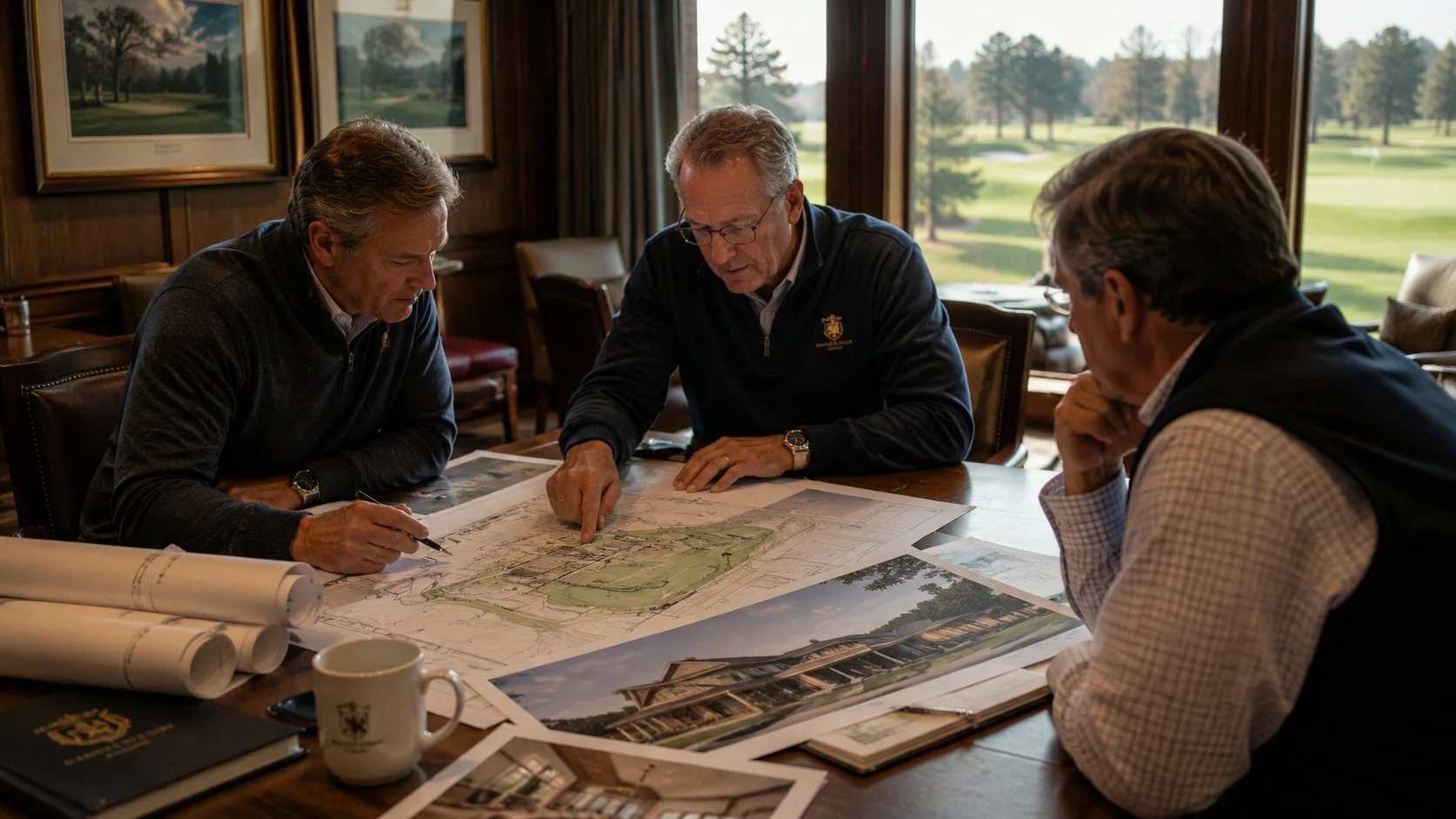
Private clubs can spend years planning a major capital project. Architects are hired, financial models are built, committees meet, and eventually members are asked to support a future they cannot fully experience yet. That makes the way a club explains a capital project nearly as important as the project itself.
I've been thinking about capital projects lately, particularly the way private clubs communicate them.
Most clubs are remarkably deliberate when planning a major investment. A clubhouse renovation may begin years before construction. Golf course projects involve architects, agronomists, engineers, committees, management teams, and countless conversations about what should change and what should remain. Even less visible projects, such as irrigation, drainage, kitchens, roofs, or mechanical systems, can require extensive study before a board is comfortable recommending a path forward.
Then comes the financial work. Clubs examine reserves, debt, recurring capital dues, assessments, and the effect each option may have on current and future members. By the time a significant project reaches the membership, leadership may have spent hundreds of hours understanding the problem and evaluating possible solutions.
The member receiving the announcement has not.
That seems obvious, but I think it explains quite a bit about why capital projects can become difficult inside otherwise healthy clubs.
The Project Members Are Actually Considering
From the board's perspective, the project may feel like the logical conclusion of a long process. The irrigation system is reaching the end of its useful life. The clubhouse no longer reflects how members use it. The golf course needs restoration. The kitchen cannot support the volume being asked of it. Leadership has studied the problem, considered the alternatives, and reached a recommendation.
Members encounter the decision differently.
They see the rendering. They see the cost. Perhaps they see an assessment. And almost immediately, they begin trying to understand what the project means to them.
Will this make the club better? Is this really necessary now? What happens if we wait? Why this solution instead of another one? Will I use what we're building? What will this do to dues? Is the board solving a real problem or simply pursuing the next improvement?
Those are reasonable questions.
I think clubs sometimes make the mistake of interpreting them as resistance to change. Certainly, some members will resist almost any capital expenditure. But many are simply trying to close an information gap that leadership has had months or years to work through.
A forty-page presentation doesn't necessarily close that gap.
What members really need is a way to understand how the institution arrived at this moment.
Every Capital Decision Has a Story
An irrigation system rarely becomes obsolete overnight. A clubhouse doesn't suddenly stop serving the membership on a Tuesday afternoon. Most capital problems develop slowly, and the history behind them is usually more important than we realize.
Perhaps previous boards studied the issue and decided other priorities were more urgent. Management may have extended the useful life of a system through repairs. Membership patterns may have changed. Dining may have become more casual. Families may be using the club differently. Water costs may have increased. Expectations for practice facilities, fitness, racquets, or year-round programming may look nothing like they did when the existing facility was designed.
Eventually, doing nothing becomes a decision too.
That's the story members need to understand.
Not every committee meeting or spreadsheet. Not every disagreement that occurred along the way. But enough context to see the progression: here is where we started, here is what changed, here is what we studied, here is what happens if we continue on the current path, and here is why leadership believes this particular investment is the responsible next step.
That isn't marketing.
It's governance communication.
The distinction matters because marketing is usually intended to persuade someone to want something. Governance communication has a different responsibility. Its job is to make the reasoning behind an institutional decision understandable, even to a member who may ultimately disagree with it.
A healthy club should be able to survive disagreement. Confusion is much harder.
The Rendering Isn't the Story
Architectural renderings are useful because they make the future visible. They are also exciting. Members can suddenly imagine sitting on the new terrace, walking into the renovated golf shop, or having dinner in a room that doesn't exist yet.
But renderings can unintentionally move the conversation toward the least important part of the decision.
People begin discussing furniture, fireplaces, rooflines, finishes, and whether they personally like the way something looks. Those things matter, but they may have very little to do with why the project became necessary in the first place.
A clubhouse renovation may really be about accommodating the way a modern membership uses the club. An irrigation project may be about protecting the golf course while using significantly less water. A course restoration may be about recovering architectural character that has slowly disappeared over decades. A new fitness facility may reflect the reality that members now experience the club throughout the week rather than primarily through golf.
Sometimes a capital project isn't really about adding something.
It is about preserving something.
That is where the institutional narrative becomes important. The project needs to connect what is being built with what the club believes it is responsible for protecting, improving, or handing to the next generation.
The rendering can help members see the project.
The story helps them understand it.
Communication Should Begin Before the Announcement
This is where I've started thinking about capital planning a little differently.
Clubs generally plan the project first and then begin planning how to communicate it. I'm not sure those should be separate processes.
If leadership cannot explain clearly why a project matters while it is still being developed, that may be useful information. Perhaps the project isn't ready. Perhaps the underlying problem hasn't been defined clearly enough. Perhaps the relationship between the investment and the club's long-term direction still needs work.
Those are much better questions to discover during planning than after an assessment letter reaches several hundred inboxes.
Communication shouldn't be the final coat of paint applied to a decision. It should be part of the architecture.
That doesn't mean members should participate in every operational or technical decision. Good governance still requires boards to govern and management to manage. But consequential decisions become easier to understand when the institutional reasoning develops alongside the physical and financial planning.
In that sense, every major capital project has three things that need to work together.
There is the physical project: what are we building?
There is the financial project: how are we paying for it?
And there is the institutional project: why does this investment belong in the story of this particular club?
Most clubs professionally manage the first two.
I'm beginning to think the third deserves the same attention.
Building Something Members Cannot See Yet
There is an unusual amount of trust involved in a private club capital project.
Members are often being asked to commit today's money to tomorrow's institution. They cannot fully experience what they are approving. They have plans, budgets, renderings, and the judgment of the people leading the club.
In a member-owned club, that's not a small thing.
Years after construction is finished, most members probably won't remember the exact financing structure or every detail of the project timeline. They will remember whether the investment made the club better. They will know whether leadership appeared thoughtful and prepared. They will remember whether they understood what was happening or felt like decisions were simply happening around them.
And eventually, they will know whether the future they were asked to believe in became the club they actually experienced.
That's why I don't think a major capital project is simply a construction project or a financial project.
It is also a governance communication project.
Members aren't simply being asked to fund construction. They're being asked to believe in a version of the club that doesn't exist yet.
Before asking them to believe in it, we should probably make sure they understand why we're building it.