
Colorado Golf Is Having a Moment
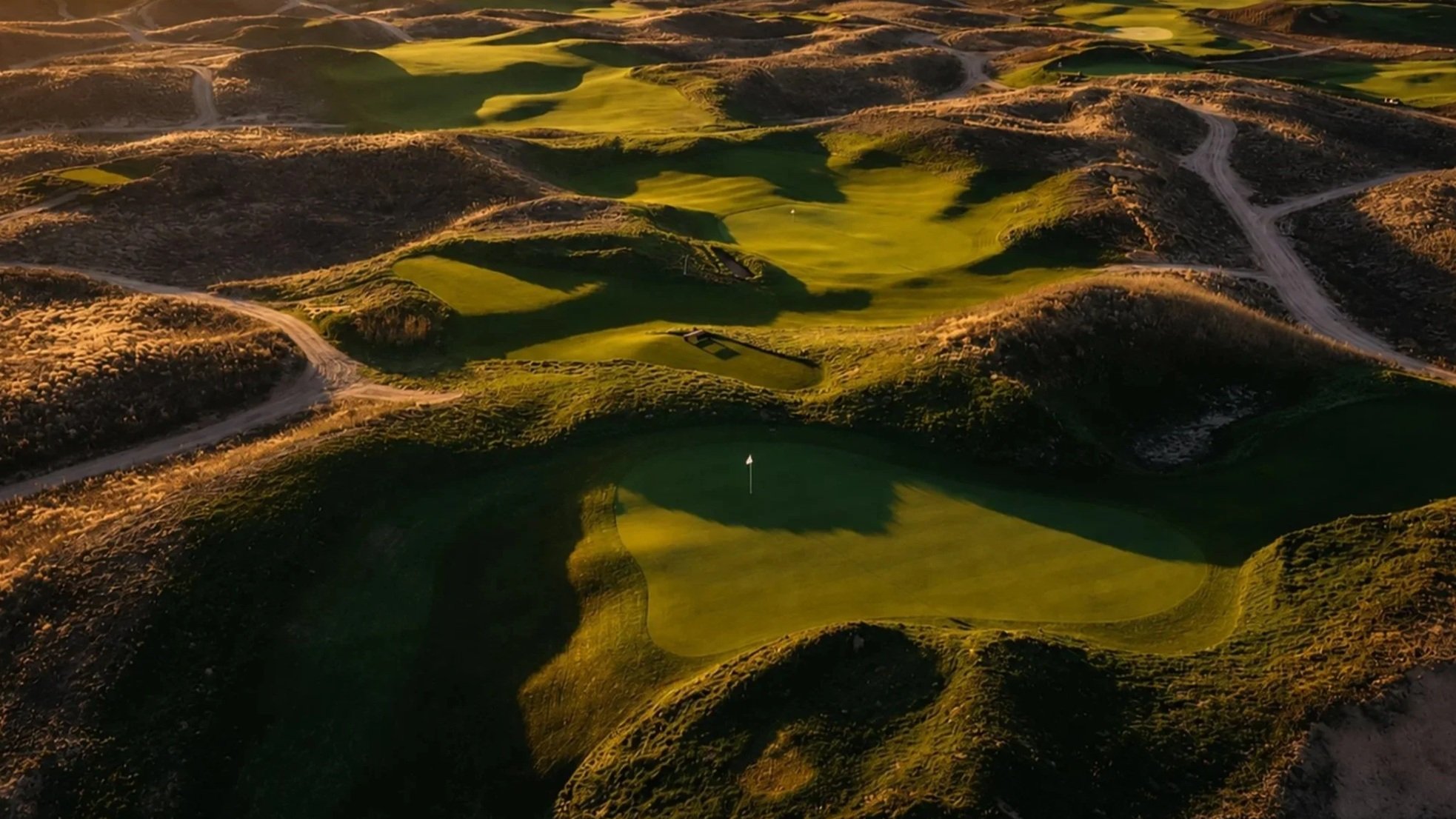
Colorado has always had very good golf. What it hasn't necessarily had is a national golf identity. I'm beginning to wonder if that's about to change.
I've been thinking about Colorado golf lately. Not any particular course, but Colorado golf itself and the place it occupies in the larger golf world.
For a state with this much good golf, I'm not sure Colorado has ever occupied much space in the national golf imagination. Serious golfers know Castle Pines and Cherry Hills. Ballyneal has earned enormous respect among people who follow golf architecture, and The Broadmoor has been part of American golf for more than a century. Colorado Golf Club has hosted significant championships, and TPC Colorado has given professional golf a permanent foothold along the Front Range.
But that is different from having a golf identity.
Mention Scotland, Pinehurst, Bandon or the Monterey Peninsula to a golfer and there is already a picture forming in his mind. The landscape, the architecture, perhaps even the kind of trip he expects to have there. Arizona has accomplished much the same thing. Desert golf means something before a particular course is ever named.
Colorado has never quite enjoyed that same clarity.
I'm beginning to wonder if that's changing.
Something Is Changing
The participation numbers are difficult to ignore. Colorado golf rounds increased 7.8 percent in 2025 while the national increase was 1.2 percent. More interestingly, rounds played in the state have increased more than 33 percent since 2019. Certainly, favorable weather contributed to the most recent numbers, but six years of increased activity suggests something larger than a good season.
At the same time, Colorado has begun showing up differently on the national golf stage.
When the BMW Championship returned to Castle Pines in 2024, it was the first PGA Tour event at the club since The International ended in 2006. More than 138,000 spectators attended during the week, the tournament raised a record $10.2 million for the Evans Scholars Foundation, and the PGA Tour named it Tournament of the Year. A decade earlier, the BMW Championship at Cherry Hills had received the same honor.
Now Colorado may be getting another opportunity. The PGA Tour is reportedly considering Denver for a regular event beginning with its redesigned 2028 schedule, with Castle Pines, Cherry Hills and TPC Colorado among the possible venues. The significance isn't simply another professional tournament. A recurring Tour stop would put Colorado golf in front of a national audience every year rather than once every decade.
And then there is Rodeo Dunes.
The first Coore & Crenshaw course is complete and being played during a Founder Preview Season. Public play begins in 2027. Work is moving forward on a second course, a putting course and restaurant, with a much larger destination planned across thousands of acres northeast of Denver.
I think Rodeo Dunes changes the conversation because Colorado has never really had a golf-first destination of this scale.
People travel to Colorado all the time. They come to ski, hike, fish, bike, visit mountain towns, attend concerts, see national parks or simply spend time outside. Golf may be part of the trip, but historically it hasn't often been the reason for the trip.
Rodeo Dunes is asking golfers to come to Colorado specifically to play golf.
That's different.
The Identity Was Already Here
What interests me most about Rodeo Dunes isn't whether it eventually becomes another Bandon Dunes or Sand Valley. I'm actually hoping it doesn't.
Colorado doesn't need another place's golf identity.
The opportunity is much more interesting than that.
The Rodeo Dunes property sits among enormous sand dunes and ranch country on Colorado's eastern plains. There are broad horizons, wind, very few trees and a sense of openness that feels distinctly Western. The developers themselves describe the place through the rugged plains, the land and Western hospitality rather than trying to convince golfers that they've somehow arrived in Scotland.
That seems important.
Golf destinations have a tendency to borrow language from places that have already succeeded. Links. Resort. Luxury. Championship. Those descriptions aren't necessarily wrong, but use them often enough and remarkably different places begin to sound alike.
Colorado already has something better available to it.
It has Colorado.
Golf here can exist among sand dunes and ranch land on the eastern plains. It can sit inside old Denver institutions shaded by mature trees. It can climb into mountain communities where elevation changes the flight of the golf ball and snow-covered peaks appear behind the green. It can become part of ski towns, resort communities, agricultural valleys and the quieter golf culture of the Western Slope.
Those experiences don't look particularly similar, which may be one reason Colorado golf has historically been difficult to define.
I'm beginning to think that diversity may eventually become the definition.
There is a common thread underneath it. The landscape is difficult to ignore here. Weather matters. Elevation matters. Distance matters. The horizon matters. Even the journey between places becomes part of the experience.
Colorado golf doesn't have to manufacture a sense of place because the place is already doing most of the work.
The golf was already here too.
Cherry Hills has hosted major championships and some of the most memorable moments in American golf. The Broadmoor's history stretches back generations. Castle Pines hosted the PGA Tour for two decades before reminding everyone in 2024 what championship golf in Colorado could look like. Ballyneal demonstrated that extraordinary golf could exist far from the population centers, and newer developments continue to explore very different versions of what a Colorado club can be.
Bluebird Club provides another current example. The invitation-only club planned for southern Aurora is expected to begin major dirt-moving this year with an opening targeted for 2028. Its plans extend beyond golf into racquets, swimming, wellness, lodging and a clubhouse oriented toward views of Mount Blue Sky. While Rodeo Dunes is attempting to draw golfers into the plains, Bluebird is building a different expression of Colorado club life along the growing Front Range.
These projects aren't creating Colorado golf.
They're adding energy to something that has been developing for a long time.
The Opportunity Ahead
A stronger golf identity creates opportunity, but I think it creates an interesting challenge for clubs as well.
As Colorado becomes easier to recognize as a golf destination, individual clubs will need to become more specific about who they are.
Not every Colorado club should tell the same story.
A century-old Denver institution has a different reason for existing than a new Front Range private club. A mountain resort has a different relationship with its members and community than a destination course on the plains. A Western Slope club sits inside a completely different landscape, pace of life and local culture.
The stronger the state's collective golf identity becomes, the more important those distinctions become.
Otherwise, we end up doing what industries often do when they recognize momentum: everyone begins using the same language. Every club becomes about lifestyle, community, elevated experiences, exceptional amenities and authentic connections. Eventually, the words stop telling us much of anything.
The state provides the setting.
The club still has to understand its place within it.
I think that matters because golf can do something unusually well when we allow it to. A good golf course reveals the land underneath it. A good club reveals something about the people who gather there. And a good destination gives someone a reason to understand a place they might otherwise have passed through.
Colorado has plenty to reveal.
There is also something encouraging about the timing. Golf participation here isn't merely keeping pace with the national boom; recently it has been exceeding it. Major professional golf has demonstrated that Colorado audiences will show up. New private clubs are being built. Destination golf is becoming real. And the possibility of a regular PGA Tour presence would give the state a recurring national stage.
None of those developments alone creates a golf identity.
Together, they begin to look like one.
I don't think Colorado needs a marketing campaign to tell the golf world that it is the next great golf destination. In fact, I'd be cautious about trying too hard to declare the moment before it fully arrives.
Let the golf make the argument.
Let Rodeo Dunes open.
Let Castle Pines continue reminding people what it is.
Let new clubs find their own identities.
Let golfers discover that a Colorado golf trip can move from the plains to the mountains and feel completely different along the way.
Then pay attention to what happens.
Colorado has always had very good golf.
I'm beginning to think we're entering the period when it becomes known for it.