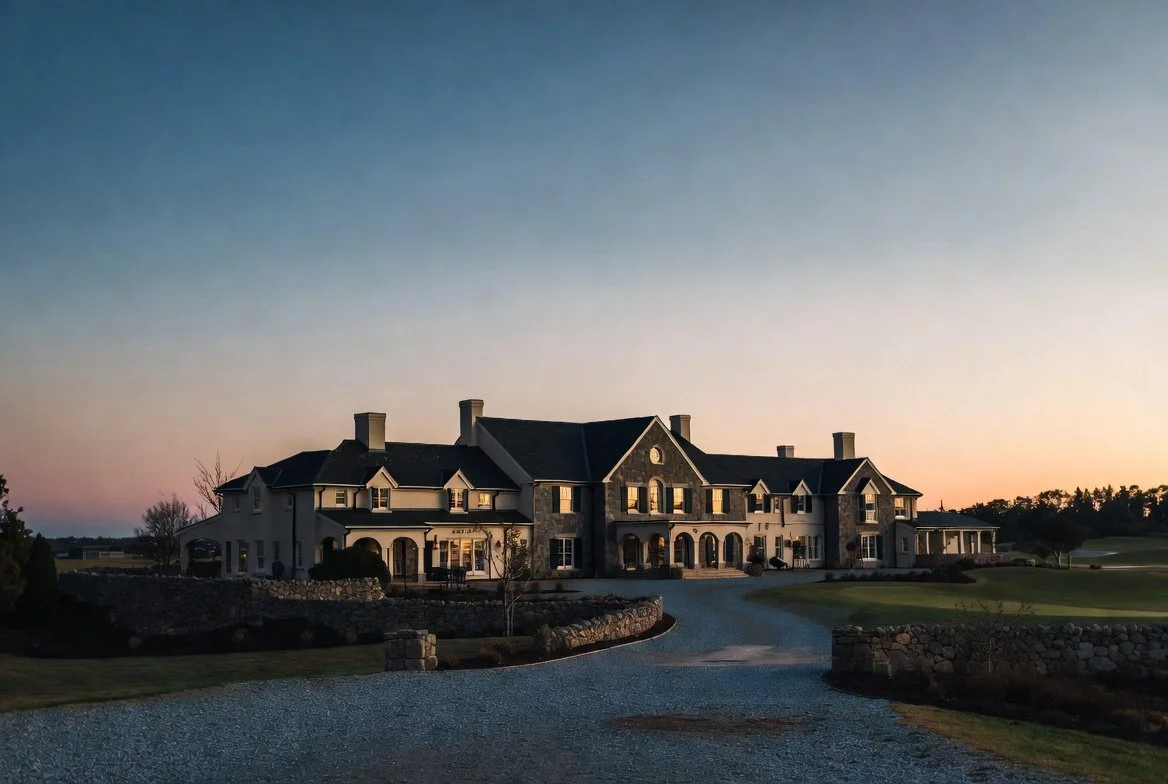
This paper outlines best practices for private club digital infrastructure, including governance alignment, communication systems, and long-term institutional continuity.
Most private clubs still think of their websites primarily as marketing assets.
That view is understandable. The website is public-facing, prospective members visit it, and much of its content is designed to communicate the club’s appeal. But treating the website only as a brochure misses a larger role it now plays inside the institution.
For many clubs, the website has become the most consistent digital point of contact between the club and the people it serves. Prospective members use it to form a first impression. Current members rely on it for information. Staff use it to direct communication. Leadership depends on it, often without realizing it, as part of the structure through which the club explains itself.
Seen this way, the central issue is not simply whether the site looks good or contains enough content. The larger question is whether the club’s digital systems are organized in a way that supports clarity over time.
Private clubs generally approach physical infrastructure with care. Golf courses are maintained according to long-term standards. Clubhouses are renovated deliberately. Capital projects are debated, budgeted, and phased. Governance structures are formalized through bylaws, committees, and board procedures.
Digital infrastructure rarely receives the same treatment.
Websites are rebuilt when they begin to feel dated. Email systems evolve as new needs arise. PDFs accumulate. Member information is distributed across multiple channels. Individual initiatives produce new pages, new forms, and new communication habits. Each decision may solve an immediate problem, but over time the system can become difficult to understand and even harder to manage consistently.
The result is often not a technology problem at all.
It is a structure problem.
What Digital Infrastructure Actually Means
Digital infrastructure extends well beyond the public website. It includes the systems through which a club communicates, organizes information, preserves content, and reinforces its identity over time.
That may include the public-facing website, member portals, email platforms, newsletters, event communication, digital archives, social channels, internal documentation, and the logic that determines where information belongs and how members are expected to find it.
Individually, these tools may work perfectly well. The difficulty comes when they have been added at different times, for different purposes, without a larger framework connecting them.
A club may have an attractive website, a capable email platform, an active social presence, and a modern member-management system while still creating a fragmented digital experience. Information appears in several places. Messages change tone depending on who sends them. Temporary pages become permanent. Important historical material disappears when a staff member leaves or a platform changes.
A coherent digital system works differently.
Its channels have distinct roles. Members know where to look. Staff know where information belongs. Leadership understands how communication supports broader club priorities. Content can evolve without requiring the institution to reinvent the structure around it.
That is what makes digital infrastructure institutional rather than merely technological.
Why Clubs Often Get It Wrong
Most clubs begin digital projects from the visible end.
The website looks dated, so it is redesigned. Photography no longer reflects the current member experience, so new images are commissioned. Messaging feels inconsistent, so content is rewritten. These are reasonable responses, and often necessary ones.
But a redesign does not automatically create a better system.
If the underlying information architecture remains unclear, the new website eventually inherits the same problems as the old one. Content begins accumulating again. Different departments publish according to different habits. Important information remains buried in email attachments or PDFs. A new board or general manager introduces different priorities, and the digital presence begins shifting with them.
The site may look newer while the institution remains structurally unchanged.
This is why digital modernization should begin with architecture rather than appearance.
The club needs to understand what information belongs where, which communication channels serve which purposes, how institutional language is maintained, and what should remain consistent across leadership transitions. Design matters, but design works best when it expresses a structure that has already been thought through.
The Digital Front Door
The public website should function as the club’s digital front door.
A front door does more than attract attention. It creates an immediate sense of what kind of place someone is entering.
For a prospective member, the website should answer a surprisingly basic question: What kind of club is this? Not simply what amenities it offers, but what it values, how it sees itself, and what kind of experience membership represents.
For current members, the digital system should reinforce that same identity over time. Communication should feel connected rather than episodic. Information should be reasonably easy to find. The tone of the club should remain recognizable even as individual messages change.
For leadership, the website and related communication systems should provide something equally important: continuity. They should create a stable framework within which new initiatives can be introduced without requiring the club’s identity to be reinterpreted each time leadership changes.
That requires restraint.
Not every idea needs a new page. Not every initiative deserves its own communication stream. Not every announcement should become permanent content. A well-designed digital system is not the one that contains the most information. It is the one that makes the important information easiest to understand and preserves the distinction between what is temporary and what belongs to the institution long term.
Best Practices for Private Club Digital Infrastructure
1. Treat the Website as Institutional Infrastructure
The website should be managed as a long-term institutional asset, not as a campaign that periodically needs to be replaced.
Its content will change, and its visual presentation should evolve, but its underlying structure should be stable enough to survive board cycles, leadership transitions, and changes in personnel. The goal is not permanence in design. It is continuity in organization.
A new communications director should be able to understand why the site is structured the way it is. A new board should not need to reorganize the digital presence simply because its priorities differ from those of the previous one. The system should have enough logic of its own to absorb change without being reset.
2. Align Communication With Governance
Private club communication should reflect the way the institution actually governs itself.
Board updates, strategic initiatives, capital projects, membership information, and operational communication should follow recognizable patterns. Members should not have to relearn how important information will be delivered every time leadership changes or a new initiative begins.
Consistency does not require every message to sound the same. It means the club develops a dependable communication rhythm and a clear sense of what belongs in each channel.
When communication is aligned with governance, members receive more than information. They begin to understand how the institution works.
3. Centralize Important Information
One of the most common weaknesses in club communication is not a lack of information, but its dispersion.
Important material may exist across old emails, downloadable PDFs, temporary webpages, board communications, member portals, and individual staff files. Members are often told the information is available somewhere, yet finding the current version becomes unnecessarily difficult.
Important information should have a clear home.
Centralization does not mean forcing everything onto one page or into one platform. It means establishing a hierarchy so members and staff know where authoritative information belongs and which version should be trusted.
This also matters for institutional continuity. Information that exists only in an old email chain is difficult for future leaders to inherit. Information placed deliberately within a broader system is much easier to preserve.
4. Keep Direct Communication at the Center
Social media can support visibility and culture, but it should rarely serve as the primary communication system for a private club.
Direct channels, particularly email, remain more reliable for important member communication because the club controls the audience, timing, and context. Members do not have to depend on an algorithm to determine whether they see a board update, event notice, policy change, or important operational message.
The larger principle is not that every club must depend exclusively on email. It is that essential communication should occur through channels the institution can control and preserve.
Social media can complement the system. It should not become the system.
5. Build for Continuity, Not Campaigns
Digital systems become difficult to manage when every new priority creates another layer.
A short-term membership campaign produces a new landing page. A capital project creates a temporary communication hub. A committee launches a new newsletter. A board initiative adds another section to the site. Individually, each addition appears useful.
The cumulative effect can be digital clutter.
Before adding anything new, the club should ask where it belongs within the existing structure, how long it will remain relevant, who will maintain it, and what happens when the initiative ends.
That discipline prevents short-term communication needs from gradually reshaping the entire system.
The goal is not to eliminate campaigns. It is to prevent campaigns from becoming architecture by accident.
What This Means for Private Clubs
Most clubs do not need more digital content.
They need a clearer digital system.
That system should help prospective members understand the institution, help current members navigate it, support staff communication, preserve important information, and carry the club’s identity through leadership changes.
When digital infrastructure is treated as an afterthought, communication becomes reactive. Each new need produces another addition, and the system slowly becomes harder to manage.
When it is treated as architecture, modernization becomes more disciplined. Existing tools can be aligned rather than continually replaced. Communication becomes easier to understand. Content serves a clear purpose. Leadership changes no longer require the club to reconsider its digital identity from the beginning.
The objective is not to create the most sophisticated digital presence.
It is to create one that accurately reflects the institution and remains useful over time.
FAQ
What is digital infrastructure in a private club?
Digital infrastructure is the connected system of websites, communication channels, archives, member platforms, and information structures through which a club shares information and preserves continuity. It is not a single piece of software. It is the architecture that determines how those tools work together.
Why do private club websites often become ineffective?
The problem is often less about design than structure. Websites accumulate content over time, communication becomes fragmented across multiple channels, and new leadership introduces different priorities without a durable framework connecting them. A redesign may improve appearance without correcting those underlying issues.
How should a private club modernize its digital presence?
Modernization should begin with clarity about structure, communication roles, governance alignment, and long-term continuity. Design, technology, and new tools should support that framework rather than substitute for it.
This concept is explored further in The Digital Front Door of a Private Club, which examines the website’s role as an institutional system in greater detail.
Markus Van Meter is a Brand Architect for private golf clubs, specializing in governance alignment, institutional identity, and long-term institutional architecture.